Grid-Independent Infrastructure
500 MW Bridge Powered
Nuclear-AI Factories
Up to ~6 GW reservable across a 12-site program. Phased COD windows from 2028.
Bypassing the utility interconnection backlog by deploying island-mode microgrids on pre-secured federal and utility assets.
Reserve MW blocks by COD window — we respond with lane fit, NDA, and draft commercial terms.
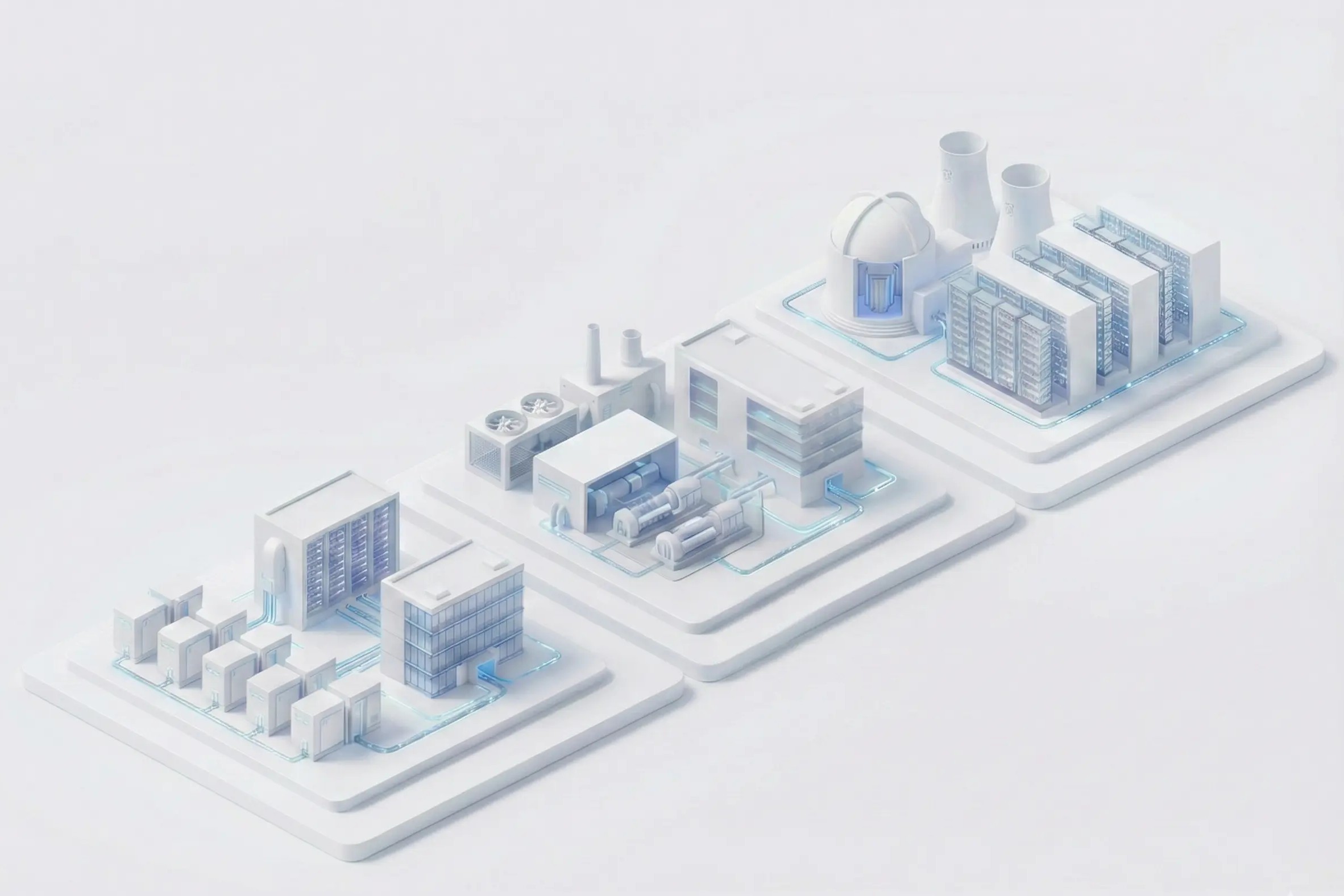
Campus — Phased Deployment Architecture
Fuel Cell
Initial rapid deployment for immediate compute needs.
Gas Engine
Bridge power to support scaling operations.
Gen III+ SMR
Full baseload nuclear power for maximum efficiency.
Energy Stack & Site Portfolio
Energy Technology Stack
Site Development Lanes
Federal Sites
Priority permitting · Hardened perimeter · Redundant fiber access
Utility Brownfield
Switchyard bypass · Grandfathered water permits · Extensive acreage
Coal-to-Compute
GW-scale transmission · Industrial zoning · Accelerated baseline
Commercial Engagement
A structured path to partnership
From initial capacity reservation through to long-term offtake agreements — every step is designed for institutional-grade counterparties operating at scale.
Behind-the-meter PPA (primary). Tolling structure available.
10–20 year offtake commitments to secure infrastructure scaling.
Indexed / fixed / hybrid structures — shared securely under NDA.
Initiate Partnership
Reserve capacity and submit formal interest to initiate planning.
Secure Access & Review
Execute NDA and gain access to secure data rooms and technical briefs.
Confirm Intent
Formalize LOI to consolidate commercial terms and project reservations.
Finalize Agreements
Complete long-term power supply and construction contracts.
Capacity Terminal
Design multi-lane portfolios
Portfolio Carbon Footprint
Capacity Deployment Ramp
Capital execution via the TK Dilus Platform
Institutional Capital Strategy
Deploying gigawatt-scale infrastructure requires moving beyond bespoke project finance. TiByte utilizes the TK Dilus programmatic platform to break complex execution risk into standardized packets—enabling institutional capital to scale efficiently across our entire fleet.
Explore TK Dilus PlatformExecution & Contracting Structure
Financing, development, and long-term asset management

TK Dilus